What we clear
Yard & debris removal
Need help with yard waste, storm cleanup, or a pile of remodel debris? Clearway Match is a free matching service that helps you compare written estimates from licensed, insured crews in your area, then choose who to hire.
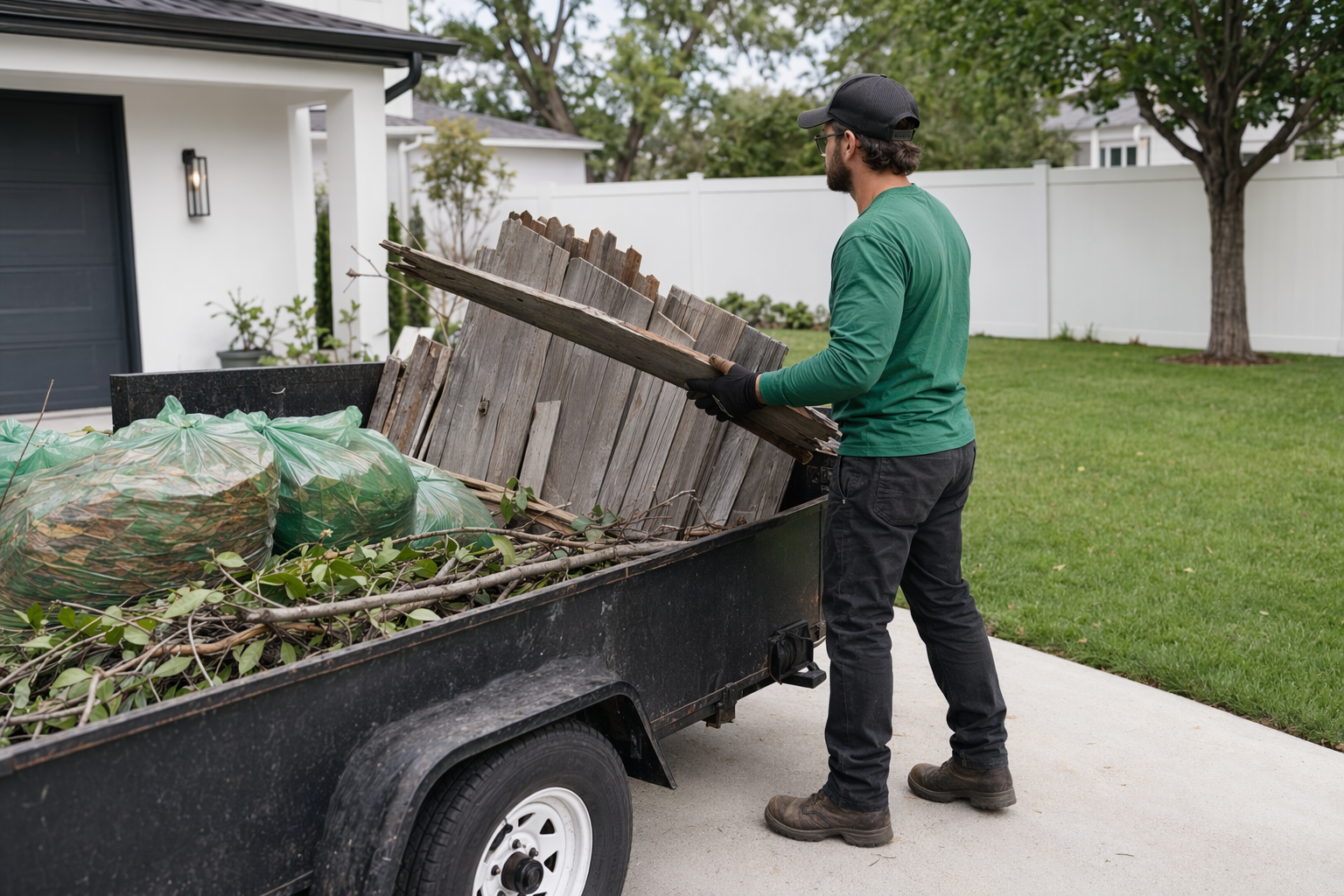
What yard and debris removal can include
Crews may handle many kinds of outdoor and light jobsite debris, depending on local rules and the size of the job.
Common examples include:
1. Bagged leaves, branches, brush, and yard trimmings
2. Storm debris, including fallen limbs and fence pieces
3. Dirt, sod, mulch, and small amounts of rock or gravel
4. Old playsets, patio furniture, sheds, and fencing
5. Light construction or remodel debris, such as drywall, wood, flooring, cabinets, and trim
Some jobs are simple curbside pickups. Others need lifting, loading, sorting, and multiple trips. Very heavy materials, hazardous waste, chemicals, paint, asbestos, and large amounts of concrete or roofing may need special handling or a different type of crew. It helps to share clear photos when you get matched.
- Ask whether the estimate includes loading, cleanup of loose debris, and disposal fees.
- If debris is mixed, ask how the crew prices wood, green waste, dirt, and construction materials.

What it typically costs
Prices depend on volume, weight, access, and the type of material. These are typical ranges, not quotes.
A few common examples:
1. Small yard waste pickup, about $70 to $150
2. Brush or branch pile, about $150 to $350
3. Storm debris removal, about $200 to $700+
4. Light construction debris pickup, about $150 to $500+
5. Full truckload, about $450 to $800
6. Large cleanup with multiple loads, about $800 to $2,500+
Heavy debris usually costs more than light debris. Dirt, concrete, bricks, shingles, and wet materials can raise the price fast because of weight and dump fees. Tight access, stairs, hand-carry distance, and same-day scheduling can also affect the total. You can review more typical ranges on our costs page.
Before work starts, ask for the full price in writing and confirm exactly what is included.
- Typical ranges are not quotes.
- Always confirm scope, labor, and disposal in writing before any work begins.
How matching works
Clearway Match does not haul or clean. We are a free matching service.
Here is the basic process:
1. Tell us what needs to go, where the debris is, and when you want help
2. Share photos if you can, they often help crews estimate more accurately
3. We match you with independent crews that say they are licensed and insured
4. You compare written estimates, ask questions, and choose who to hire
You are always in control. There is no obligation to hire a crew just because you asked to be matched. See how it works for the full process.
- We only need contact details and job details.
- Do not send bank information, Social Security numbers, or other sensitive records.
What to expect on pickup day
A smooth job usually starts with a clear scope. Try to separate materials if you can, especially green waste, wood, and heavy construction debris.
Before the crew starts, confirm:
1. Which pile or items are included
2. Whether sweeping or raking is included
3. Whether the crew will enter a backyard, shed area, or jobsite
4. The final written price or pricing method
5. Any extra charges for weight, stairs, distance, or added items
If debris is near power lines, mixed with hazardous materials, or too close to a structure to move safely, the crew may need to adjust the plan. For larger or mixed jobs, photos and a written item list can help avoid surprises.
- Move pets and keep kids away from the work area.
- If possible, set aside items you want to keep before the crew arrives.
How to vet a crew before you hire
It is smart to compare more than price alone. A lower estimate is not always the better value.
Ask each crew:
1. Are you licensed and insured for this kind of work in my area?
2. Can you send your estimate in writing?
3. What materials are included, and what is excluded?
4. Are disposal fees included?
5. Who is responsible if property is damaged?
You should verify a crew's license and insurance yourself before work starts. If your job includes remodel debris, ask whether they can legally haul and dispose of those materials in your area. When you are ready, you can get matched and compare options side by side.
- Written estimates make it easier to compare scope fairly.
- Ask for arrival windows, payment terms, and any trip or cancellation fees up front.

We help you compare written estimates from independent yard and debris removal crews for free, so you can choose the one that fits your job and budget.
Common questions
Do crews take bagged leaves and branches?
Usually yes. Many crews handle bagged yard waste, loose brush, and branch piles. Price often depends on how much there is, how easy it is to access, and whether loading is needed.
Can I include fence pieces, patio furniture, or an old shed?
Often yes, but tell the crew in advance. Bulky outdoor items can change labor time, truck space, and disposal costs. Photos help crews give a more accurate written estimate.
Will crews take construction debris from a small remodel?
Many do, especially for wood, drywall, flooring, trim, cabinets, and similar debris. Rules can vary by area and by material type, so confirm in writing what they will take and whether disposal fees are included.
How can I get the most accurate estimate?
Share clear photos, rough pile size, material type, and access details. Let crews know if there are stairs, long carry distances, gates, mud, or very heavy materials. Ask for the full scope and price in writing before work starts.
Do I need to put everything at the curb?
Not always. Some crews offer curbside pickup, while others can remove debris from a backyard, side yard, garage, or jobsite. Access and labor usually affect the price, so confirm the pickup location in the estimate.