Quick answers
How to dispose of an old TV safely
Old TVs should not go in the regular trash in many areas, especially older tube-style sets. The safest plan is to check your local rules first, then compare written estimates from licensed, insured crews or approved recycling options if you need help moving it.
Short answer
If you need to get rid of an old TV, start by finding out what kind it is. A flat-screen TV is often easier to recycle or remove. An older CRT, the heavy box-style TV with a glass tube, usually has stricter disposal rules because it may contain leaded glass and other materials that need special handling.
You usually have a few options:
- Take it to a local electronics recycling drop-off, if your city or county accepts TVs.
- Use a retailer or manufacturer take-back program, if one is offered in your area.
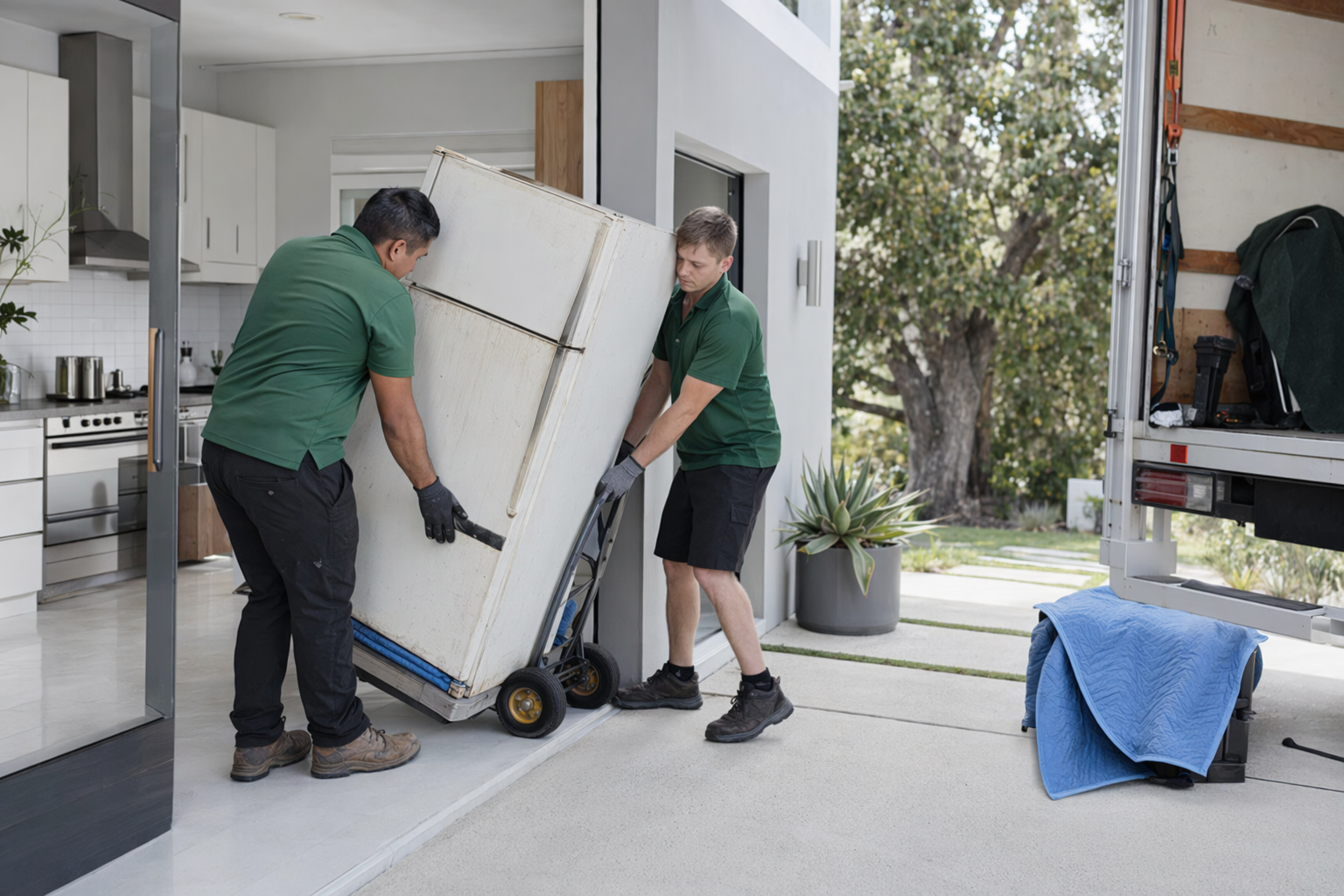
- Hire a licensed, insured crew to pick it up, especially if it is heavy, upstairs, or part of a larger cleanout.
Typical pickup pricing for one TV can fall around $70 to $150, but that is not a quote. Heavier TVs, stairs, distance, and extra items can raise the price. Always confirm scope and price in writing before work starts.
- CRT TVs often have stricter disposal rules than flat screens.
- Do not leave a TV at the curb unless your local program clearly allows it.
- If you need help, you can [get matched](/get-matched/) with independent crews and compare written estimates.

The details
Not every TV can be handled the same way. The size, weight, and age of the set matter.
A small flat-screen may fit in your car and be accepted at an electronics recycling event or facility. A large TV, especially an older CRT, can be very hard to move safely. Some weigh well over 100 pounds. If the screen or tube breaks, cleanup can get harder.
Before you arrange disposal:
- Check city, county, or state rules for electronics recycling.
- Ask whether there is a fee for TVs, especially for CRT sets.
- Measure the TV and note whether it is upstairs, in a basement, or mounted to a wall.
- Remove any personal items stored around it, like remotes, game discs, or cables you want to keep.
If the TV is part of a bigger job, like clearing a garage, estate, or cluttered room, it may make sense to bundle it with other items. A larger pickup might fall in typical ranges like $450 to $800 for a full truckload, or $800 to $4,000+ for a whole-home or estate cleanout, depending on volume and labor. These are typical ranges, not quotes. You can compare options on our costs page and see how it works.
- Mounted TVs may take extra time if wall brackets also need removal.
- Some recycling sites accept only residents of certain towns or counties.
- Ask for written confirmation of what the crew will take and where items will go.
What to watch for
Be careful with any company or individual that is vague about pricing or disposal. A few simple checks can help you avoid problems.
Ask these questions before you book:
- Are you licensed and insured for this type of pickup in my area?
- Is the price based on one item, weight, volume, stairs, or labor time?
- Are there extra charges for a CRT, basement pickup, wall removal, or long carry distance?
- Will I get the full price and scope in writing before the work starts?
A few warning signs:
- They will not give written details.
- They avoid questions about insurance.
- They offer a very low price, then say the real cost will be decided on site.
- They tell you to leave the TV somewhere that seems against local rules.
If your TV still works, donation may be possible, but call first. Many groups do not accept older or very heavy TVs. If the set is not working, recycling is often the better path. You should also verify the crew's license and insurance yourself before hiring.
- Do not ask strangers to haul a very heavy TV without proper help and planning.
- If you are clearing out a loved one's home, written estimates can make family decisions easier.
- Never share sensitive records like SSNs or financial account numbers when asking for help.
Get matched
If moving the TV feels like too much, or you want help comparing local options, Clearway Match can help you find independent crews near you. We are a free matching service, not a hauling company. You tell us the basic job details, we connect you with licensed, insured crews, and you compare written estimates and choose who to hire.
This can be useful when:
- The TV is too heavy to move safely.
- It is in a basement, upstairs room, or tight space.
- You also need other electronics, furniture, or junk removed.
- You want a simple way to compare local written estimates.
When you get matched, share only the contact and job details needed to describe the pickup. Then confirm the final scope, price, and timing in writing directly with the crew before any work begins.
- Clearway Match is free to use.
- You choose the crew, not us.
- Written estimates make it easier to compare real costs and scope.

The safest way to get rid of an old TV is to follow local recycling rules and compare written estimates if you need a licensed, insured crew to pick it up.
Common questions
Can I throw an old TV in the trash?
Maybe not. Many cities and states do not allow TVs in regular trash, especially CRT televisions. Check your local solid waste or recycling rules before putting a TV at the curb.
How much does it usually cost to get rid of one TV?
A single TV pickup often falls in a typical range of about $70 to $150, but that is not a quote. Price can change based on the TV type, size, weight, stairs, travel, and whether you have other items too. Confirm the full price in writing before work starts.
What is a CRT TV, and why does it matter?
A CRT is the older box-style TV with a deep back and heavy glass tube. These sets are much heavier than flat screens and often have stricter disposal rules because of the materials inside, including leaded glass.
Should I recycle, donate, or hire a pickup crew?
If the TV still works and a local group accepts it, donation may be an option. If it does not work, recycling is often the better choice. If it is very heavy, hard to move, or part of a larger cleanup, hiring a licensed, insured crew may be the safest and simplest route.
What should I ask before hiring someone to remove a TV?
Ask whether they are licensed and insured, how pricing works, whether there are extra charges for stairs or CRT sets, and whether they will give the full scope and price in writing before the job starts. You should verify their license and insurance yourself.