Quick answers
Do I need to be home for junk pickup?
Sometimes yes, sometimes no. It depends on where the items are, whether the crew can access them safely, and what the company wants you to confirm before work starts.
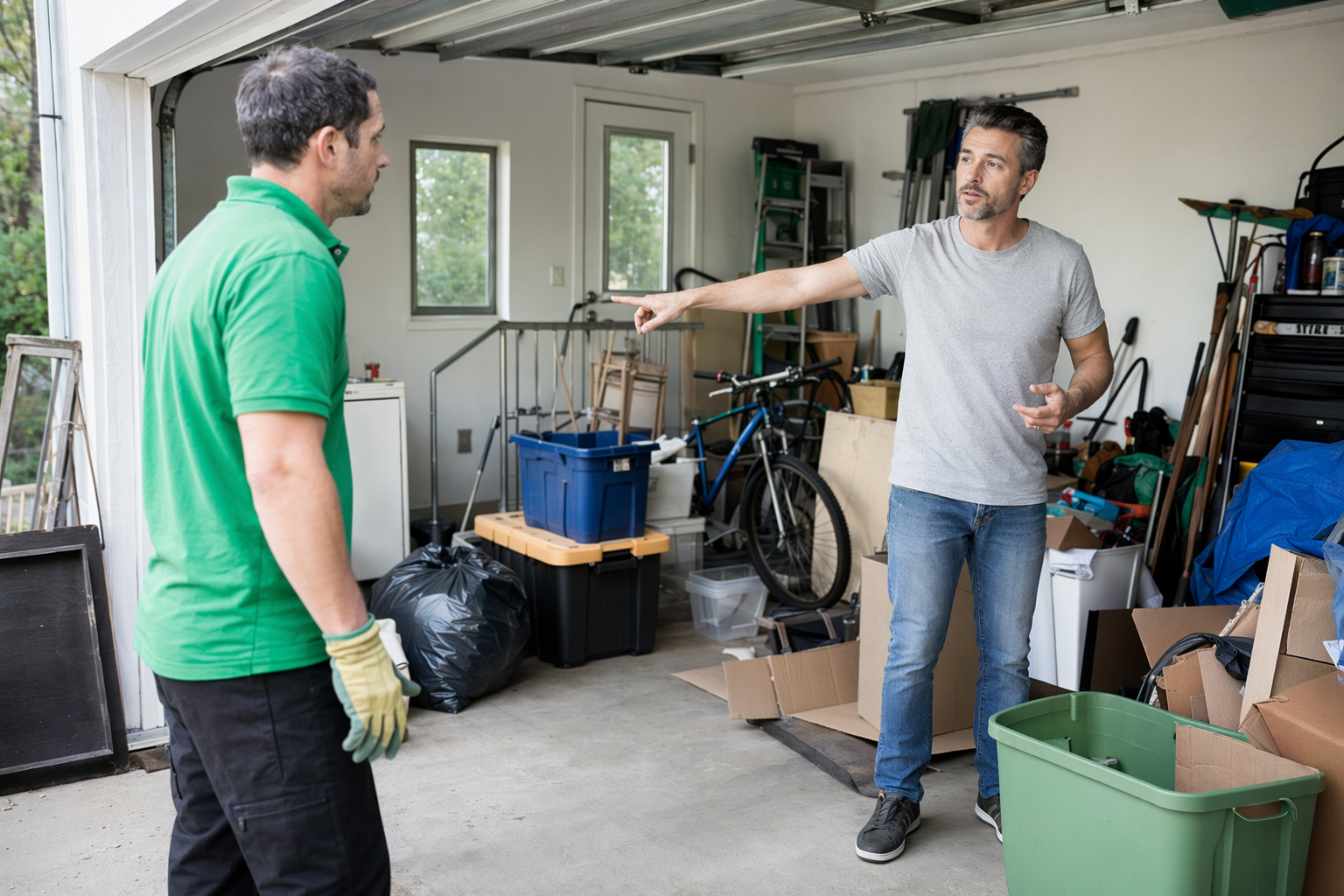
Short answer
You do not always need to be home for junk pickup. Many crews can remove items without you there if everything is outside, easy to reach, and clearly marked.
If items are inside your home, garage, attic, basement, storage unit, or fenced yard, most crews prefer that someone be there. That helps avoid confusion about what stays and what goes.
Before any job, ask for the scope and price in writing. Since prices vary by item count, volume, stairs, distance, and labor time, confirm details before work starts. Typical ranges, not quotes, are about $70-$150 for a single item, $450-$800 for a full truckload, and $800-$4,000+ for large cleanouts. You can compare local options through get matched and review more typical costs.
- Outside pickup is often easiest to do without you home.
- Indoor pickups usually go smoother if an adult is present.
- Always confirm the exact pickup area and items in writing.

The details
Whether you need to be home usually comes down to access, approval, and liability.
1. Access
If the crew can reach the items without entering your home, they may be able to do the job while you are away. Curbside, driveway, and open-garage pickups are the most common examples.
2. Approval
Some crews want a quick call, text, or signed approval before they start. This is common when the final price depends on how much space the load takes up in the truck.
3. Safety and building rules
If there are stairs, elevators, tight hallways, pets, locked gates, or apartment loading rules, it often helps to have someone there.
4. Inside vs. outside items
For inside pickups, being home helps prevent mistakes, especially if some items look similar or family members are sorting at the same time.
If you cannot be there, leave clear instructions. Label items with tape or sticky notes, move "keep" items away from the pickup area, and share gate codes or parking details only if needed for access. A quick photo list can also help.
If you are arranging a larger cleanout, estate cleanout, or heavy clutter job, ask how the process works before booking. Our how it works page explains how Clearway Match helps you compare written estimates from independent crews.
- Photos can help confirm exactly what should be removed.
- Separate donation, trash, and keep items before pickup day if possible.
- If building access is limited, ask about arrival windows and rules in advance.
What to watch for
If you will not be home, take a few simple steps to protect yourself and avoid mix-ups.
- Get the item list in writing. Be specific, especially with furniture sets, boxes, and garage piles.
- Ask how the final price is calculated. Some jobs are based on volume, some on labor, and some on special handling.
- Confirm whether photos are enough. For some jobs, a crew may need an in-person look first.
- Verify license and insurance yourself. Clearway Match connects you with independent crews, but you should still confirm coverage directly before hiring.
- Do not leave valuables nearby. Move documents, jewelry, medication, keys, and sentimental items away from the pickup zone.
- Check local or building rules. Condos, apartments, and HOAs may have move-out, elevator, or loading requirements.
For heavy clutter or hoarding cleanup, it is often better to have a trusted person present, even if the person who lives there prefers privacy. These jobs can be emotional. A calm, clear plan helps the crew work at the household's pace and avoid removing anything important by mistake.
- Never assume a verbal quote covers extra labor, stairs, or added items.
- Keep pets secured if a crew will access the property.
- For storage units, ask whether the facility requires you to be on site.
Get matched
If you are not sure whether you need to be home, the easiest next step is to compare a few local crews and ask the same questions.
With Clearway Match, you can share your contact info and job details, then hear from independent junk removal, estate cleanout, or hoarding cleanup crews in your area. You can compare written estimates, ask about no-contact or curbside pickup, and choose who to hire.
Use get matched to start. It is free to use, and you stay in control of the decision.
- Ask each crew if they allow curbside, driveway, or no-contact pickup.
- Request written confirmation of scope, timing, and price before work starts.
- Choose the crew that best fits your access needs, budget, and comfort level.

You might not need to be home for junk pickup, but for indoor, large, or sensitive jobs, having someone there usually makes the job safer and less stressful.
Common questions
Can junk be removed from my curb if I am not home?
Often yes. If the items are at the curb, driveway, or another easy-to-access spot, many crews can pick them up without you there. Ask for the scope and price in writing first, and confirm exactly which items will be taken.
Do I need to be home for furniture removal?
If the furniture is inside the home, usually yes, or at least someone should be there. If it is already outside and clearly marked, some crews may not require it. Final rules depend on the crew, access, and whether extra labor or stairs are involved.
Will the price change if I am not there?
It can. Some crews charge by truck space used, labor time, stairs, distance, or special handling. If you will not be present, ask how the final total is calculated and get the approved item list and pricing method in writing before any work starts.
What should I do before an unattended pickup?
Clearly mark the items to remove, move keep-items out of the area, secure pets, and remove valuables or private papers from nearby spaces. If access is needed, share only the minimum details necessary, such as a gate code or parking instructions.
Is it better to be home for a large cleanout or hoarding cleanup?
Usually yes. Large or sensitive jobs often go better when a homeowner, family member, property manager, or trusted support person is present. That helps the crew ask questions, protect important belongings, and work in a respectful, organized way.