Guides
Understanding hoarding cleanup: a compassionate guide
Hoarding cleanup is not just about removing stuff. It is about safety, dignity, privacy, and moving at a pace that feels manageable for the person involved.
Handled with care
Heavy clutter is never a character flaw. The crews we match you with work discreetly, without judgment, and at your pace — privacy first, always.
What hoarding cleanup usually involves
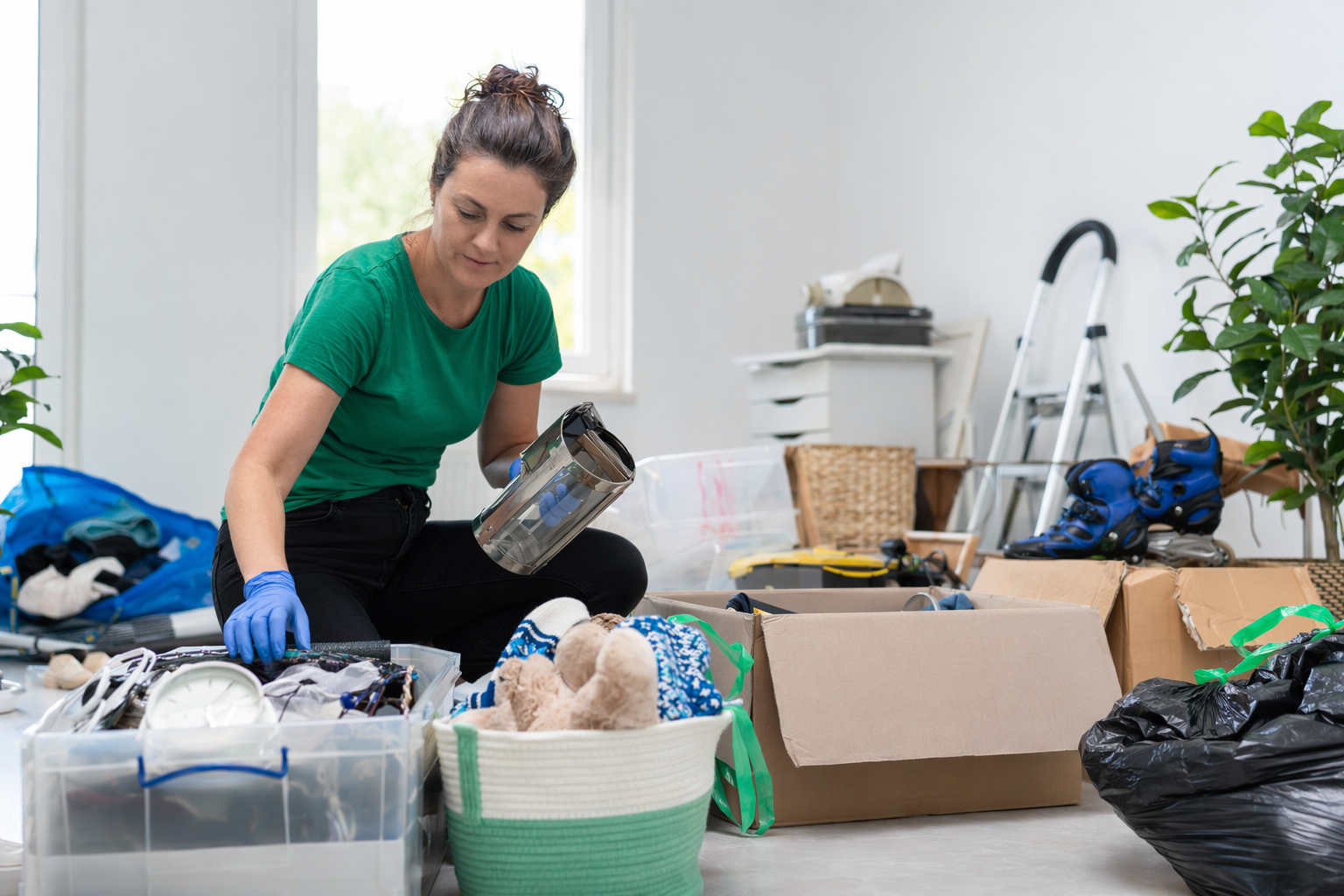
Heavy clutter can make everyday life harder and can create safety risks like blocked exits, falls, pests, mold, or damage that is hard to see at first. Cleanup can mean sorting items, bagging trash, removing bulky junk, clearing walkways, and making rooms usable again.
Some jobs are small, like clearing one room or a path to a bathroom. Others are much bigger, like a whole apartment, garage, or family home. In some cases, there may also be odor issues, pests, or items that need special handling.
A good crew should work with care and discretion. They should explain the scope clearly, give a written estimate, and let you decide what stays, what goes, and what needs more time. Typical ranges can vary a lot, but partial cleanouts may start in the hundreds, while large whole-home jobs can run about $800 to $4,000 or more, depending on volume, labor, access, and condition. These are not quotes. Always confirm scope and price in writing before work starts.
If you want to compare options, Clearway Match can help you get matched with independent local crews for written estimates.
- Heavy clutter is not a moral failing.
- Cleanup can be done in stages, not all at once.
- Written estimates help families compare scope, price, and timing.

Key points to keep in mind
The most important part of a hoarding cleanup is respect. Many people feel exposed, overwhelmed, or afraid of being judged. A calm, private approach matters.
Here are a few things that often help:
- Start with safety first, like exits, stairs, kitchens, bathrooms, or places where someone sleeps.
- Break the job into smaller steps, such as one corner, one room, or one clear walkway.
- Decide ahead of time who has the final say on items, if that is possible.
- Ask for a written scope so everyone understands what the crew will and will not do.
- Verify the crew's license and insurance yourself before hiring.
It can also help to know that not every item has to be decided in one day. Some families make a keep, donate, recycle, and discard plan before the crew arrives. Others ask the crew to focus only on obvious trash and unsafe areas first.
You can learn more about typical pricing on our costs page.
- Privacy and discretion should be part of the plan.
- A slower pace can still be real progress.
- Safety goals often come before perfect organization.
How to support a loved one without pressure
If you are helping a parent, spouse, sibling, or friend, try to lead with concern, not force. Heavy clutter is often tied to stress, loss, grief, trauma, or other personal struggles. You do not need to label it or diagnose it to be helpful.
A few practical ways to support someone are:
- Ask what feels hardest right now.
- Focus on one clear goal, like making the front door open fully or clearing a bed.
- Offer choices instead of commands.
- Avoid surprise cleanouts whenever possible.
- Take breaks and keep the tone calm.
If emotions are running high, it may help to pause and come back later. In some situations, families also choose to involve a counselor, social worker, or other support professional. That can be useful alongside cleanup, especially when decisions feel very hard.
If the person is at risk because of blocked exits, fire hazards, severe pest issues, or unsafe structural conditions, tell the crew about those concerns when asking for estimates. Share only contact details and job details, not sensitive personal records.
- Small wins can build trust.
- The person's pace matters.
- Support can include outside professionals when needed.
How Clearway Match can help
Clearway Match is a free matching service. We do not haul, lift, or clean ourselves. We connect households with independent junk removal, estate cleanout, and hoarding cleanup crews so you can compare written estimates and choose who to hire.
When you reach out, you can share basic job details like location, the type of cleanup, photos if you want, access issues, and any timing concerns. Then you can review options and ask questions about discretion, staging the job, item handling, and cleanup steps.
Before you hire anyone:
- Ask for the full scope in writing.
- Confirm what is included, like labor, hauling, disposal, and extra fees for stairs, pests, or heavy items.
- Verify the crew's license and insurance yourself.
- Make sure everyone agrees on what stays and what goes.
To see the process, visit how it works or get matched when you are ready.
- Clearway Match is free to use.
- You compare independent crews, not one company.
- Written estimates make it easier to choose carefully.

Hoarding cleanup should be private, respectful, and done at a pace that protects safety while giving the person real say in what happens.
Common questions
How much does hoarding cleanup usually cost?
It depends on how much needs to be removed, how many workers are needed, how long the job takes, and whether there are stairs, pests, odors, or unsafe conditions. Smaller partial jobs may cost a few hundred dollars, while large whole-home cleanouts often range from about $800 to $4,000 or more. These are typical ranges, not quotes. Always get the scope and price in writing before work starts.
Can cleanup be done in stages?
Yes. Many families choose a step-by-step plan instead of clearing everything at once. A crew may start with walkways, exits, a bathroom, or one room at a time. This can feel less overwhelming and gives the person more control.
Will crews judge the person or share private details?
A professional crew should be respectful and discreet. You can ask how they handle privacy, who will be on site, and whether unmarked vehicles or quieter scheduling are possible. It is reasonable to expect clear communication and dignity throughout the job.
What should I do before asking for estimates?
Try to note the address, the areas that need help, access issues like stairs or elevators, and any safety concerns. Photos can help if you are comfortable sharing them. It also helps to decide who will approve what stays and what goes. Share only contact and job details, not financial account numbers, Social Security numbers, or other sensitive records.
Do I need a mental health professional for this?
Not always, but extra support can help in some situations, especially if cleanup brings up distress, conflict, or very hard decisions. A counselor, social worker, or other support professional may be useful alongside the cleanup process. This page is not medical advice.