Guides
How to plan an estate cleanout, step by step
An estate cleanout can feel heavy, especially after a move, downsizing, or a loss. A simple plan can help you protect important items, avoid rushed choices, and get written estimates from licensed, insured crews you choose yourself.
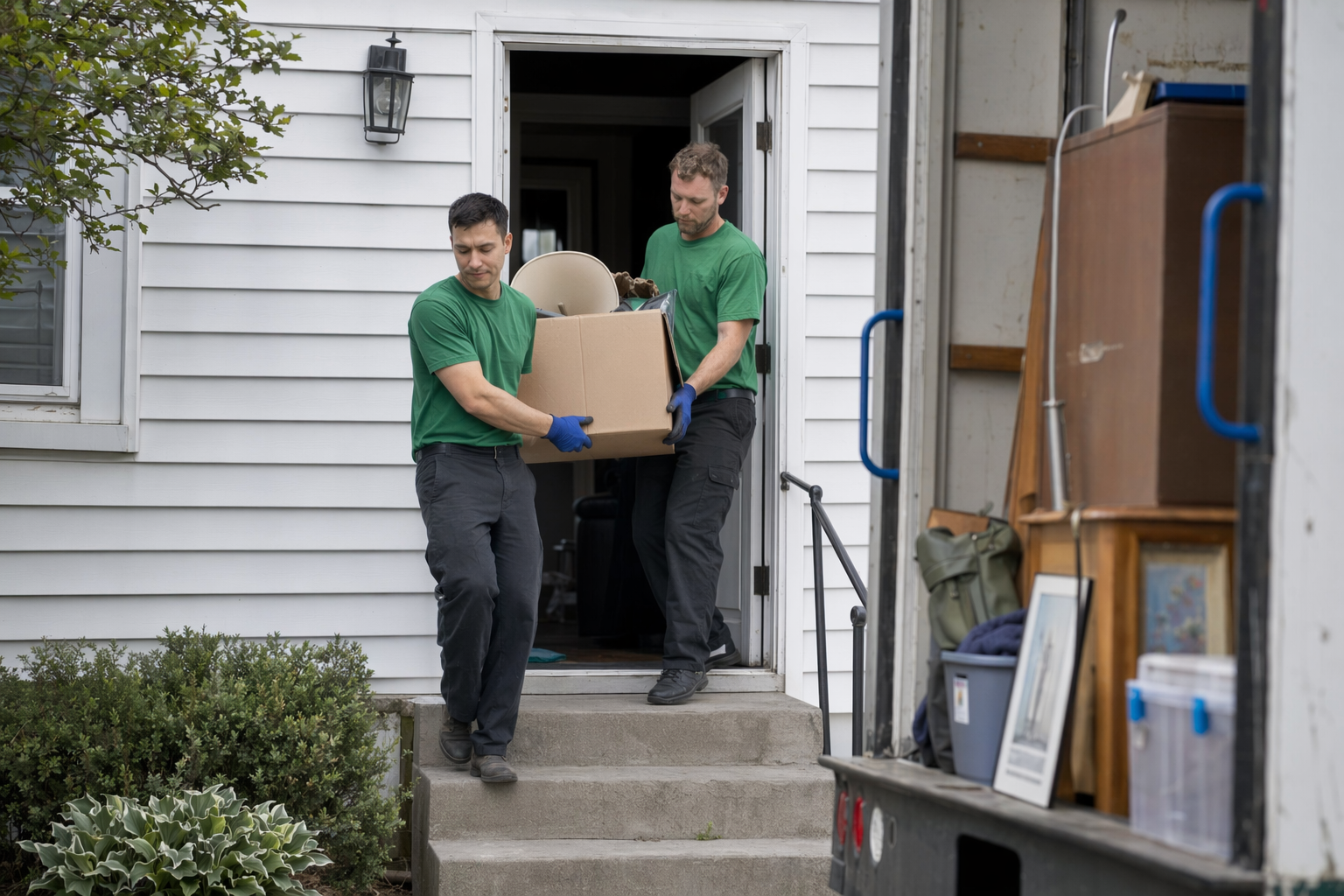
What an estate cleanout usually includes
An estate cleanout means clearing a home, garage, attic, basement, yard, or storage area after someone moves, downsizes, or passes away. Some families do part of the work themselves and hire a crew for the heavy lifting, loading, and hauling.
A cleanout may include furniture, clothing, papers, boxes, appliances, mattresses, and general household clutter. It can also include donation drop-off, recycling, and disposal, depending on what a local crew offers and what your area allows.
Typical price ranges depend on volume, labor, access, and time. A small pickup might be around $150-$350. A full truckload is often about $450-$800. A whole-home or estate cleanout may run about $800-$4,000 or more. These are typical ranges, not quotes. Always confirm the exact scope and price in writing before work starts.
If you are still comparing options, our costs page can help you understand what usually affects the total.
- Estate cleanouts are often priced by volume, labor time, and access
- Stairs, long carries, heavy items, and packed rooms can raise the price
- Hazardous waste, paint, and chemicals may need special handling or separate services

Key points before you start
Try not to begin by hauling everything out at once. It is usually easier, and less stressful, to protect important items first and make a simple plan for the rest.
Start with the basics:
- Secure legal and personal records, keys, mail, photo albums, jewelry, medicines, and anything sentimental.
- Check for items that may need special handling, like firearms, paint, propane tanks, old electronics, or confidential papers.
- Decide what is staying, what may be sold or donated, and what can be removed.
- Choose who will make final decisions so the process does not stall.
It also helps to walk the property room by room and take photos. That gives you a record of what is there before any work begins. If more than one family member is involved, set a deadline for claiming keepsakes.
If the home has very heavy clutter, move at a pace that feels manageable. Privacy and dignity matter. If needed, you can ask for help from a cleanup crew and also seek support from a trusted professional, friend, or family member.
- Put valuables and documents in one locked room or remove them before a crew arrives
- Do not leave pricing, scope, or donation plans to verbal discussion alone
- Verify a crew's license and insurance yourself before hiring
A step-by-step plan for the cleanout
A clear sequence can save time and reduce conflict.
- Make a simple room list. Note what must stay, what needs review, and what can go.
- Pull out the must-keep items first. Family photos, legal papers, heirlooms, chargers, keys, and medications are easy to miss in a fast cleanout.
- Sort into clear groups. Keep, donate, sell, shred, recycle, and remove.
- Check access. Measure doorways, note stairs, elevators, parking limits, and HOA or building rules.
- List special items. Pianos, safes, large appliances, exercise equipment, and sheds often need extra labor.
- Ask for written estimates. Share photos, room count, and your target timeline.
- Confirm the scope in writing. Make sure the estimate states what will be removed, what will stay, and any add-on charges.
- Prepare for the work day. Reserve parking if needed, unlock gates, and keep pets and children clear of work areas.
- Do a final walkthrough. Check closets, cabinets, attics, basements, and outdoor spaces before the crew leaves.
If you want, you can do this in phases. Many households start with one room, a garage, or a storage area, then schedule the rest after they see how much volume there really is.
- Photos help crews give more accurate written estimates
- Bagging loose trash and boxing small items ahead of time can reduce labor time
- Ask where items are likely to go, donation, recycling, or disposal, if that matters to your family
How Clearway Match can help you compare crews
Clearway Match is a free matching service. We do not haul, lift, or clean ourselves. We help connect you with independent junk removal, estate cleanout, and heavy clutter cleanup crews so you can compare written estimates and choose who to hire.
When you get matched, share basic contact details and job details, like the property type, location, photos, item volume, access issues, and timeline. We do not need financial account numbers, Social Security numbers, or sensitive records.
Before hiring anyone, ask for:
- A written estimate with the exact scope of work
- Confirmation of license and insurance
- Any added charges for stairs, distance, bulky items, or extra labor
- A clear arrival window and payment terms
You can also review how it works if you want a quick picture of the matching process before you start.
- You stay in control of who you contact and who you hire
- Comparing more than one written estimate can help you spot scope differences
- Always verify license and insurance yourself before work starts

Estate cleanouts go more smoothly when you protect important items first, sort the job into clear steps, and compare written estimates from licensed, insured crews before you hire anyone.
Common questions
How long does an estate cleanout take?
It depends on the size of the property, how full it is, and how much sorting is needed first. A small apartment may take a few hours. A full house, garage, attic, and yard can take a day or more, sometimes several visits. Ask each crew for a written estimate that includes the expected time frame.
What should I remove before a crew arrives?
Take out anything you know you want to keep, especially IDs, legal papers, photos, jewelry, cash, keys, medicines, and sentimental items. It is also smart to remove anything with personal data or set aside papers for shredding if that service is not included.
Can a crew donate usable items?
Some crews may offer donation drop-off when items are clean, usable, and accepted locally. Policies vary by area and by charity. If donation matters to you, ask about it up front and get that part of the scope in writing.
How do I avoid surprise charges?
Share good photos, describe stairs and access, list bulky or extra-heavy items, and ask for the full scope in writing. Confirm whether the estimate includes labor, loading, hauling, disposal, and any extra fees for distance, appliances, sheds, or packed rooms. Written details matter more than verbal guesses.
What if the home has very heavy clutter?
Start with safety and privacy. Remove only the most important personal items first, then ask for written estimates from crews experienced with heavy clutter or hoarding cleanup. The process should be discreet, respectful, and done at a pace that works for the household. If emotional support would help, consider involving a trusted family member or professional support person.